Todoist wins for
- •Mature productivity-method ecosystem and templates.
- •More structure for projects, filters, and recurring workflows.
- •Better fit for users who enjoy building a system.
Todoist is the stronger planning system. TONT is the lighter execution layer. Students should choose based on where their friction actually lives.
Todoist wins on planning depth. TONT wins on reducing friction once you already know what needs to happen today.
Todoist has a mature productivity ecosystem. Its methods library, recurring workflows, and help content make it easier to build a full system around projects, reviews, and templates. If you think in projects and like maintaining a detailed setup, that depth can be valuable.
That same depth can also become a tax for students who are still trying to get basic daily execution under control.
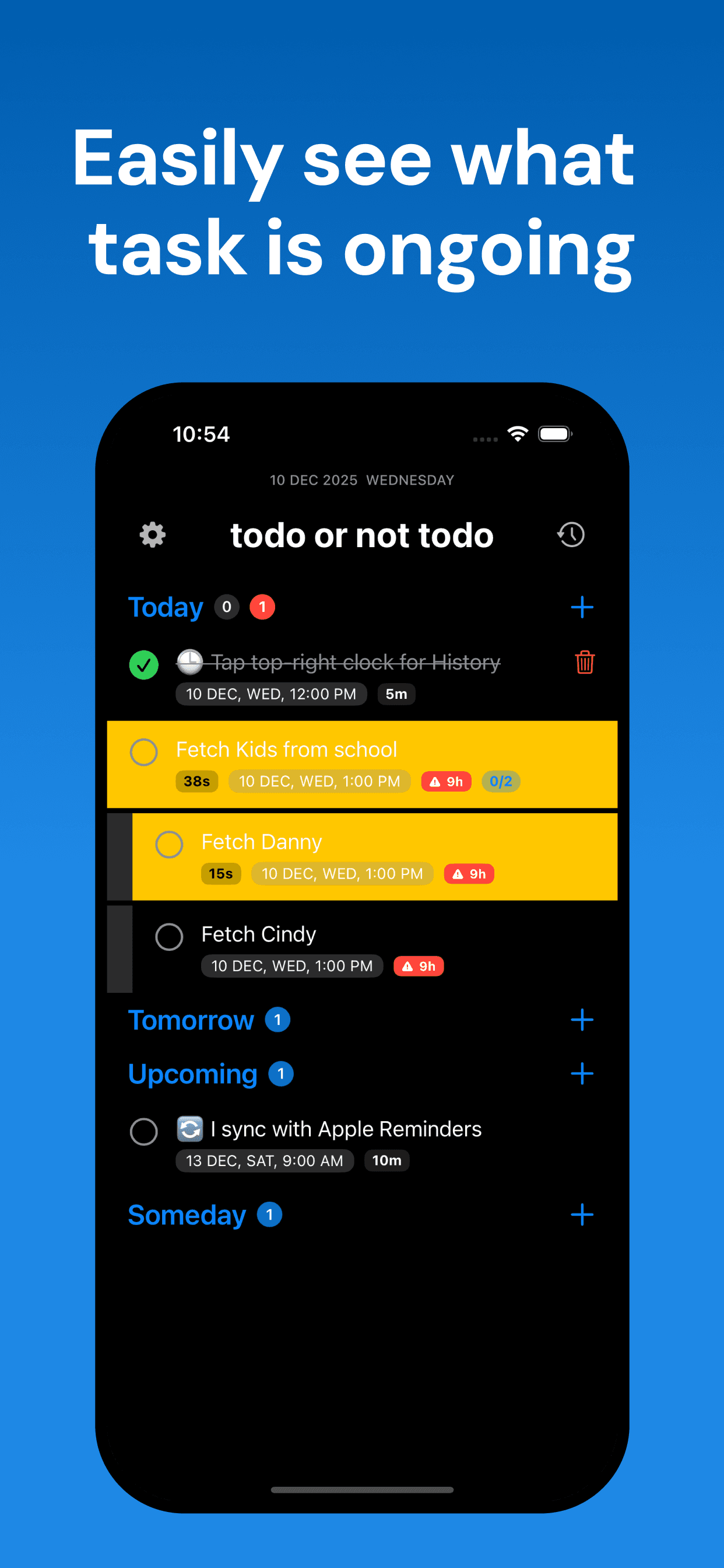
TONT is intentionally smaller. Its advantage is not breadth; it is the lower cost of deciding what is next and moving into the task. For students who already have class systems, portals, and calendars pulling at them, a simpler execution tool can be the better fit.
The tradeoff is obvious: you give up some planning sophistication to keep the day lighter.
If your work repeatedly falls apart because projects feel messy and nothing is structured, Todoist is probably the better first move. If your problem is that you keep planning and still do not start, TONT is the more targeted tool.
Students often assume they need more system than they really do. In practice, the right tool is the one you still use during the busiest week of the semester.
Yes. That split can work well if you like Todoist’s structure but want a less cluttered mobile execution loop.
Usually the lighter tool. Overwhelmed students often need fewer visible decisions, not more customization.
Current
Current
Dartmouth guide
If you want a lighter execution layer after planning and study prep, TONT keeps the next task visible without turning your day into another maintenance project.
Explore TONT